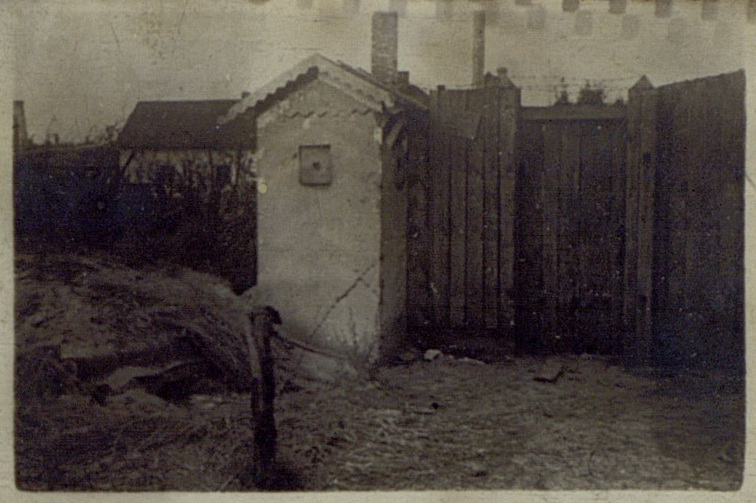
Gate with guardhouse at the entrance to Himmelfahrtstrasse in the former Lager 2, August 1944. The farm is on the left.
The re-discovery of a 1944 photograph in the Russian State Archive is partially rewriting the history of the Sobibor extermination camp. This photograph, part of a series of 17 images, reveals the gate to the infamous Himmelfahrtstrasse (the Slauch) and the farmhouse (Erbhof) in Lager 2 (Camp 2) at Sobibor. Until this find, it was widely believed that all traces of the camp were completely erased by the Nazis immediately after the prisoner uprising on October 14, 1943.
This re-discovery confirms that recognizable structures of the camp were still present in the summer of 1944. As Bernolf Kramer of the Sobibor Foundation, who rediscovered the photos, notes, “The gas chambers were blown up, but you cannot erase a place where 170,000 people were robbed and murdered.”
The photos are part of a report dated August 19, 1944, compiled by Lieutenant Colonel Volski, acting head of the political department of the NKVD (Soviet internal security) troops of the 1st Belorussian Front, during an investigation into Nazi crimes in liberated Eastern Poland. The documents and photos were made public online by the Central Archive of the Ministry of Defence of the Russian Federation in 2018 to mark the 75th anniversary of the Sobibor uprising.
Some of the photos were previously published in a brochure about the 2019 archaeological excavations edited by Marek Bem: Sobibór. archeologia terenu po byłym
nazistowskim obozie zagłady 2000-2017. British historian Hannah Wilson also mentioned them in her dissertation (2023): “Let My Cry Have No Place, Let It Cry Through Everything”: The Material Memory of Sobibor Death Camp. It is unknown why these photos were not added to later research results.
What the photos also show
Beyond the Himmelfahrtstrasse gate and the farmhouse, the series of photographs also depicts:
- The guardhouse at the Himmelfahrtstrasse entrance.
- The ‘Rampe’ (platform) where trains arrived.
- Quarters of the camp guards.
- Gripsing images of piles of personal belongings, including prams (strollers), artificial limbs, hair, dinnerware, and walking sticks—the possessions of the murdered victims.
- Three survivors of the uprising: Abrahm Kohn, the Dutch woman Ursula Stern, and Israel Trager.
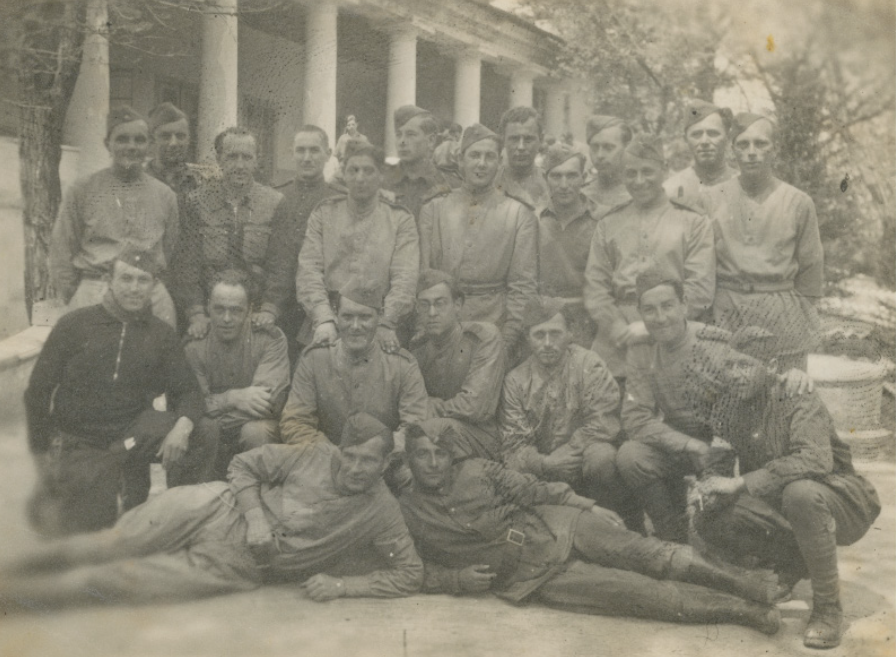
In 1944, Ursula Stern photographed Soviet soldiers. Copyright: Safran family
Ursula’s confirmed her presence in Sobibor in 1944 in het testimony in Hagen in 1965 as stated in the book of her grandson: “After the liberation, Ula went to the house of a wealthy Jewish woman who sheltered many Jewish survivors in the Polish city of Włodawa. There she met her friend from the camp, Selma Wijnberg, and her fiancé, Chaim Engel. Ula and Selma knew that Polish and Russian Jews hid valuables and jewelry in their torn clothes and buried them in the camp ground to prevent them from reaching the Germans. They decided to go look for them, so they would have the means to return to the Netherlands. The three of them went to the death camp to see what was left.”
Abrahm Kohn and Israel Trager also describe their presence in the area around Chełm and Sobibor in the summer of 1944 in post-war testimonies.
According to archaeologist Ivar Schute, who was involved in the excavations in Sobibor, the gate in the photo is the entrance to the Schlauch or Himmelfahrtstrasse in Lager 2 (Camp 2). He immediately recognized the location because he had excavated the foundations of the guardhouse and the gate, but was not familiar with these photos. Erik Schumacher, author of the book about the archaeological research that made Sobibor’s history visible, was also unaware of these images. Why they were not documented earlier since their release in 2018 is unknown.
The farmhouse (Erbhof) is also visible in the photos in the Niemann album that was discovered in Germany in 2015. During the camp’s operation, the farmhouse served, among other things, as a feeding area for geese, which were driven out as the deportees were herded to the gas chambers through the Himmelfahrtstrasse.
The discovery confirms that in the summer of 1944, the camp grounds not only still contained some recognizable structures, but also that many goods belonging to deportees and human remains were still visible.
Russian researchers and journalists, in the wake of the Soviet army, collected witness statements from survivors, local residents, and former Trawniki in 1944. The NKVD (People’s Commissariat for Internal Affairs) was the Soviet government organization responsible for internal security. It also included the notorious Main Directorate of State Security, which dealt with the tracing of “enemies” at home and abroad. The NKVD was later transformed into the KGB (now FSB) and the MVD, which still exists in present-day Russia. The Russian State Archive contains several such documents.
The findings were published in, among others, Komsomolskaya Pravda (September 2, 1944) and Amigoe di Curaçao (September 22, 1944), which also featured a short interview with Selma Engel-Wijnberg.
Listen to our new seven-part podcast (in Dutch) about, among other things, the rediscovered photos: De stilte van sobibor (English-language podcast, The Silence of Sobibor, to follow later).
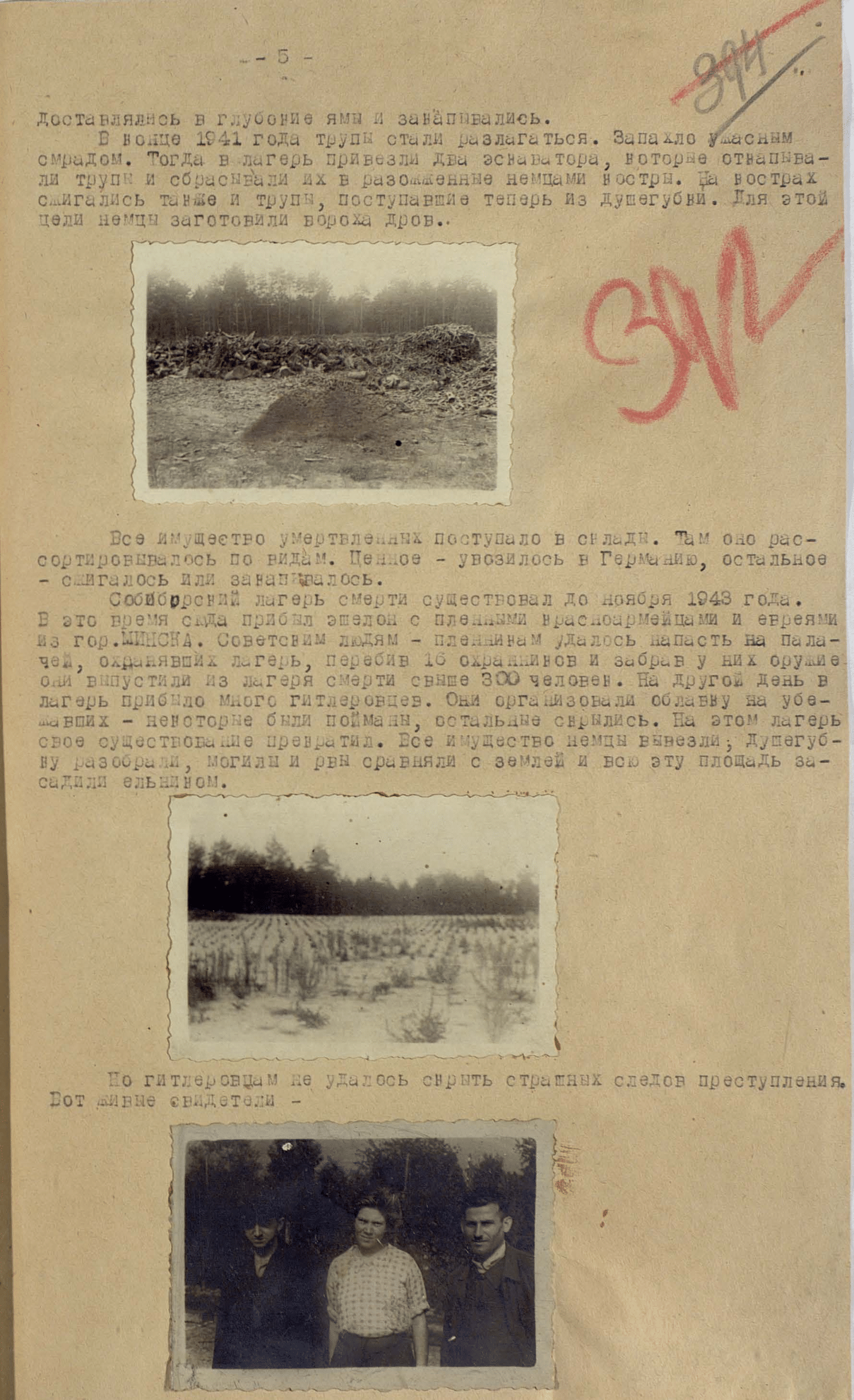
Pagina 5 van 6 van het verslag over Sobibor van 19 augustus 1944. Foto1: Goederen van gedeporteerde Joden. Foto 2: Blik op de aanplant op de massagraven en het voormalige Lager 3. Foto 3: Abrahm Kohn, Ursula Stern en Israel Trager.
View Volski’s full report here, including all 17 photos and an English translation of the Russian text.